
This year the Museum has fully reopened its family inquiry program, allowing members of the public to request information about the constables of Manchester’s policing past.
But what type of information can you expect to find in our archives, how can you view them, and what are the requirements for accessing them?
Police Records at the GMP Museum
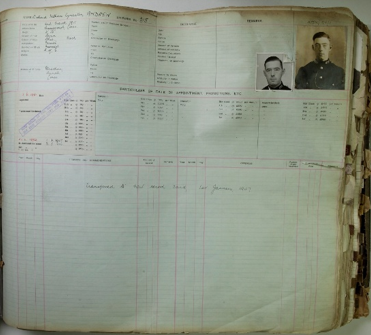
The GMP Museum is the primary caretaker of Manchester’s policing history, with records going back to the founding of modern policing in Manchester in 1839. A wide variety of personnel records are kept in our archives which offer glimpses into the past lives of Manchester constabularies, preserved for the public to research and enjoy.
The most common types of records in the collection which contain personnel information include:
– Appointment Registers: Large books detailing what constables have been appointed to a constabulary. Information on individual constables is often limited to basic physical descriptions, residency, previous employment, and joining dates.
– Watch Committee Reports: Until the 1960s, police forces reported to local government authorities, and these bodies could appoint and administrate constables in their governed areas. Watch Committee reports can consequently contain details on local constables, such as training information, misconducts, promotions, retirements and obituaries.
– Discipline/Misconduct Books: Some constabularies kept all misconducts in a single summary book for ease of access, some of which still survive today in our collections. Entries in this book can be more detailed than their accounts and can include the outcomes of the investigations.
What is in a Police Personnel Record?
The best source of information on specific constables from Manchester’s past are the personnel records. These files usually contain the key documents of a constable’s career and provide the most complete picture of their life in one of Manchester’s historical constabularies.
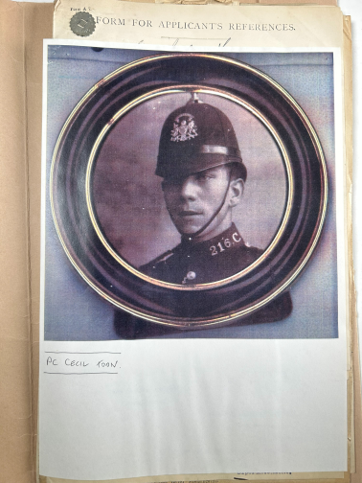
To illustrate what can be found in these records, let’s look at an example file belonging to PC Cecil Toon, an early 20th century constable with the Manchester City Police.
PC Toon’s file is fortunate to contain his photograph, which is not always guaranteed in a personnel file, and even shows his collar number 216 ‘C’.
This record also includes key documents from Pc Toon’s career, such as his application form for the Manchester City Police in 1926, when he was 25. This example also includes his eventual resignation date in 1951.
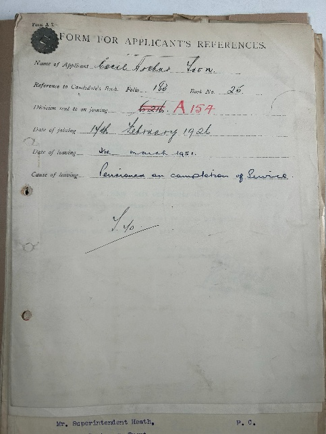
Alongside the application and vetting forms, there is almost certainly going to be the official appointment form and contract, where Pc Toon signs the Conditions of Service as a member of the Manchester City Police.
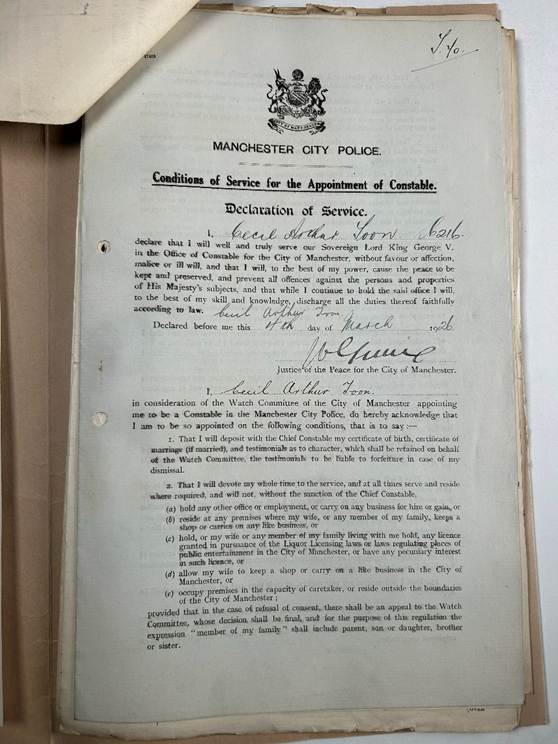
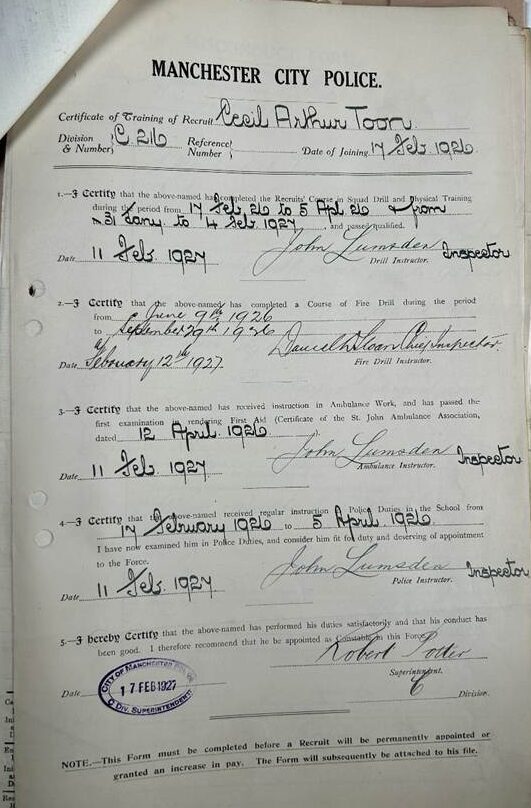
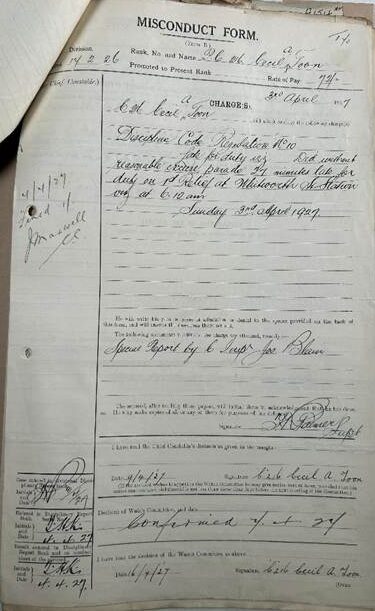
Other documents frequently found in personnel files are the various training, commendation and potential misconduct forms which constables accrue over the course of their careers.
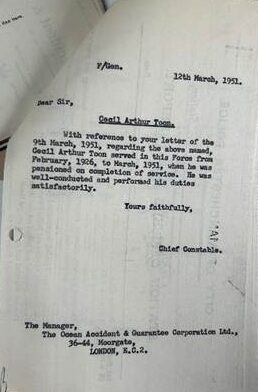
The end of the files will likely contain the correspondence for a constable’s retirement/resignation from their force.
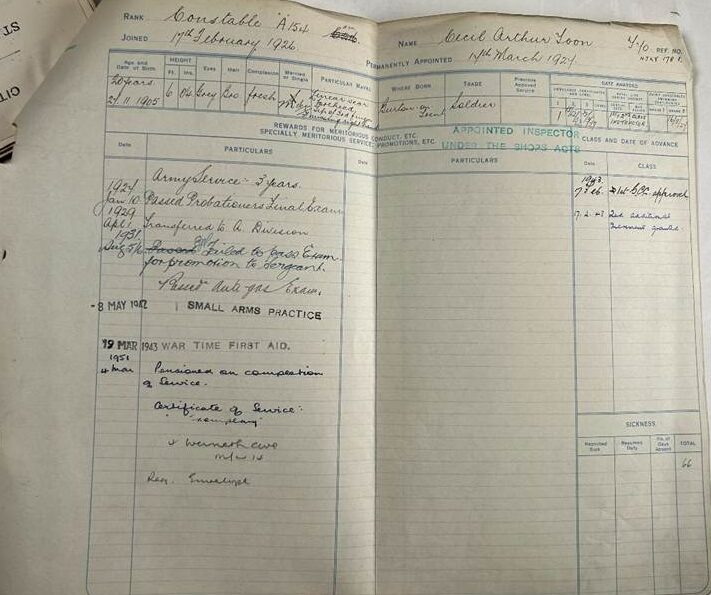
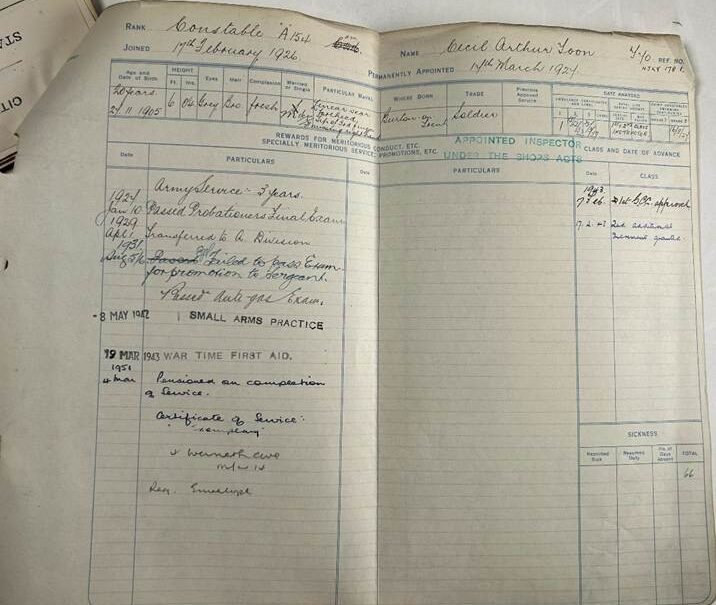
It is common for much of the information above to be brought together in a single summary document, such as the one below. These summaries can, on occasion, detail things lost in the rest of the file, such as training he received during WWII, and that he served three years in the military before joining the police in 1926.
Requesting and Viewing Police Records
So now you know more about what to expect to see in our records, but how do you find what looking for?
The museum archive is not exhaustive, and there is unfortunately no guarantee that we will have any records for the constable you are looking for. The best first step is to search for a constable’s name in our websites search engine: Greater Manchester Police | Museum & Archives
If you can find the constable’s name in our search engine, there is a strong chance his records are kept with us.
If your search is unsuccessful, this does not mean we do not have the records, and your next step is to contact us with a request for us to check our archives. For all requests/inquires, please use our email address:
police.museum@gmp.police.uk
If we find the records you are searching for, we can then arrange for you to see the records in person or potentially scan the records to you via email.
Requirements to Access Records
It’s important to note that for some records you may be required to provide documentation before being given access to a record. Records belonging to any living constable are protected, and only accessible to family members.
As such, if you are requesting to view records belonging to anyone born within the last 100 years, or who is likely still alive, you will be required to prove that you are related to this constable.